Two people can take the exact same supplement every day and still get different amounts out of it. The difference usually isn't the formula. It's the routine built around it.
Before a nutrient can do anything, it has to make it through several steps. It has to stay intact in the bottle, break down in the stomach, pass through the wall of the gut and enter the bloodstream. A little can be lost at each step, and everyday habits shape how much makes it through.
Most of these habits happen without much thought, which makes them easy to overlook. Researchers have studied four of them closely, and each one is simple to work into a normal day.
1. Link It to a Daily Habit
A habit forms when you repeat the same action in the same situation until the situation itself becomes the reminder. A review in the British Journal of General Practice describes habits as actions triggered automatically by cues in your surroundings. Over time, the conscious decision drops away, and pouring your morning coffee or sitting down to dinner starts to prompt the next step on its own.
In a study published in the European Journal of Social Psychology, researchers at University College London followed nearly 100 volunteers as they built a new daily habit. On average, it took 66 days for the behavior to become automatic, with a range of 18 to 254 days. Missing a single day did not undo the progress people had already made.
The same review points to a cue within an existing daily routine as a stable starting point for a new habit. Keeping the bottle where you'll see it at that time of day makes the cue hard to miss. [1] [2]
2. Pair It With a Meal
What you eat alongside a supplement can change how much of it reaches your bloodstream. Some nutrients dissolve in fat, so they need a little fat in the same meal to pass through the wall of the gut. According to the Linus Pauling Institute, CoQ10 is best absorbed when it's taken with a meal that contains fat. Vitamin D works the same way.
A study in the Journal of the Academy of Nutrition and Dietetics measured how much this matters. Adults who took vitamin D3 with a meal containing fat absorbed 32% more of it than adults who took the same amount with a fat-free meal.
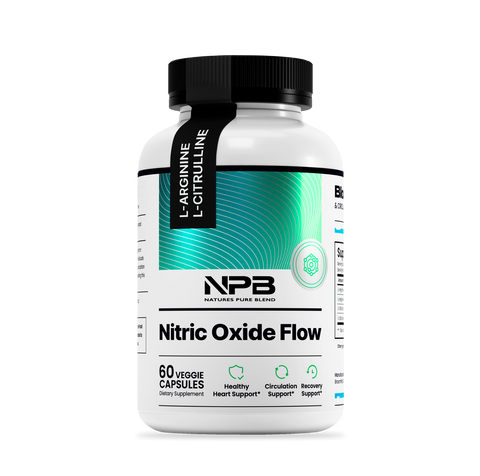
Other ingredients dissolve in water and don't rely on fat at all. L-arginine and L-citrulline, the amino acids in Nitric Oxide Flow, are two of them. The directions on each label say how that product is meant to be taken. [3] [4]
3. Keep It Somewhere Dry
Many people keep supplements in the bathroom or beside the kitchen sink, two of the most humid spots in a home. Steam from a shower or a boiling pot can leave the air in these rooms heavy with moisture. The National Library of Medicine notes that heat and moisture from the shower, bath and sink can damage pills and capsules well before their expiration date.
Some supplement ingredients, including vitamin C and certain B vitamins, pull moisture from the air until they begin to dissolve. Once that happens, they break down quickly. In a Purdue University study, some products kept in humid conditions lost all of their vitamin C within about a week, and the loss didn't reverse once the product dried out.
Each time the bottle opens, a little humid air gets in, so a lid alone doesn't fully protect what's inside. A bedroom drawer or a cupboard away from the stove, sink and dishwasher keeps conditions steady. [5] [6]
4. Stick to One Serving
When a day gets missed, it's tempting to take two servings the next morning to catch up. The body doesn't absorb nutrients that way. The gut can only take in so much at one time, and what it can't use passes through. The National Institutes of Health notes, for example, that the body absorbs calcium best in amounts of 500 mg or less at a time.
Larger single amounts can also be harder on the stomach. A review in the Journal of Nutrition found that single servings of 3 to 6 grams of L-arginine rarely caused digestive side effects, while most side effects appeared at single amounts above 9 grams. Picking back up with your usual serving at your usual time avoids taking in more than the body can handle at once. [7] [8]
Small Changes Add Up
Each of these habits works on a different step. A daily cue makes sure the serving gets taken. The right meal helps more of it pass into the bloodstream. A dry shelf keeps the ingredients intact until they're used, and one serving at a time stays within what the body can absorb at once.
None of them require new products or extra time. They're small adjustments to things you already do, and over weeks and months, they help each serving deliver more of what's in the bottle.