

5 Nutrients Involved in Nitric Oxide Production
Nitric oxide is a molecule your body produces to help blood vessels relax and widen. This process supports circulation, allowing blood to move more easily to muscles, organs, and other tissues.
Healthy blood flow also plays a role in physical arousal. Although nitric oxide does not determine sexual desire on its own, it helps support the vascular response involved in genital blood flow.
Your body has two main ways of producing nitric oxide. One pathway uses amino acids, particularly L-arginine. The other converts dietary nitrates into nitrite, which can then be converted into nitric oxide.
Other nutrients help these pathways work properly by protecting nitric oxide, supporting important enzymes, or replenishing the materials needed to keep production going.
Here are five nutrients and dietary compounds involved in that process.
1. Dietary Nitrates Provide an Alternative Production Pathway
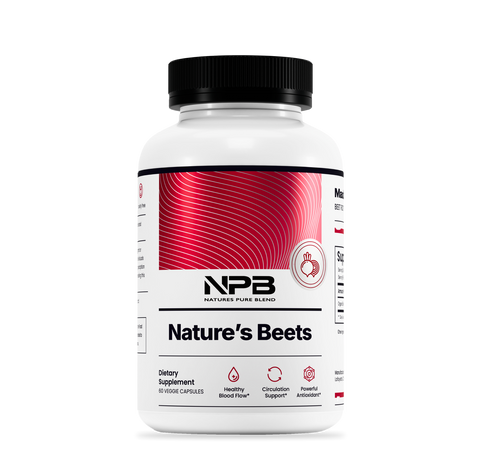
Dietary nitrates are naturally occurring compounds found in vegetables, particularly leafy greens and beets.
After you eat nitrate-rich foods, your body absorbs the nitrate and circulates some of it back into your saliva. Beneficial bacteria in your mouth convert part of that nitrate into nitrite. [1]
Nitrite is a compound your body can then turn into nitric oxide.
This process gives the body another way to support nitric oxide production alongside the pathway that uses amino acids.
In one study, 19 healthy women followed a diet rich in high-nitrate vegetables for one week. Their blood levels of nitrite nearly doubled, increasing from 98 to 185 nmol/L.
Their systolic blood pressure—the top number in a blood pressure reading—also decreased by 4 mmHg. [2]
The findings show how food choices can influence a measurable step in the nitric oxide pathway.
Foods that contain dietary nitrates include:
-
Arugula
-
Spinach
-
Beets
-
Lettuce
-
Celery
-
Swiss chard
Simple way to include them: Build a salad around arugula or spinach, or add roasted beets to a meal.
2. L-Arginine Supplies a Direct Building Block
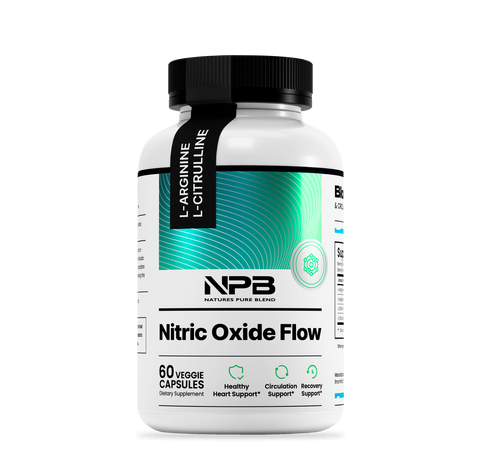
L-arginine is an amino acid the body uses as a starting material to produce nitric oxide. [3]
An enzyme called nitric oxide synthase converts L-arginine into nitric oxide. During that same reaction, the body also produces another amino acid called L-citrulline.
You can think of L-arginine as the raw material that feeds this production process.
Researchers have studied whether increasing L-arginine intake affects blood-vessel function. A review of 12 short-term studies involving 492 participants found that L-arginine supplementation improved flow-mediated dilation by an average of 1.98 percentage points.
Flow-mediated dilation measures how well blood vessels widen in response to increased blood flow.
The improvement was most noticeable in people whose blood-vessel function was lower at the start of the studies. [4]
Foods that contain L-arginine include:
-
Pumpkin seeds
-
Peanuts
-
Almonds
-
Walnuts
-
Chickpeas
-
Lentils
-
Soybeans
-
Turkey
-
Chicken
-
Fish
Simple way to include it: Add pumpkin seeds or chickpeas to a leafy green salad, or include a serving of fish or poultry with vegetables.
3. L-Citrulline Helps Replenish L-Arginine
L-citrulline supports nitric oxide production differently from L-arginine.
Instead of serving as the immediate starting material, L-citrulline can be converted back into L-arginine. [5]
That matters because nitric oxide production uses L-arginine. Replenishing the body’s supply helps maintain access to the amino acid nitric oxide-producing enzymes need.
This relationship creates a useful cycle: L-arginine helps produce nitric oxide and L-citrulline, and L-citrulline can then be recycled into L-arginine. [6]
In a study involving 10 healthy volunteers, oral L-citrulline supplementation was associated with a doubling of L-arginine levels in the blood. [7]
The result helps explain why L-citrulline is often discussed alongside L-arginine rather than as a separate, unrelated nutrient.
Watermelon is the best-known natural food source of L-citrulline. Researchers have identified the amino acid in both watermelon flesh and rind, although amounts vary among varieties. [8]
Simple way to include it: Add fresh watermelon to breakfast, blend it into a smoothie, or enjoy it as a snack.
4. Vitamin C Helps Protect Nitric Oxide Activity
Producing nitric oxide is only part of the process. The body also needs conditions that help nitric oxide remain available long enough to do its job.
Vitamin C supports that process in two ways.
First, it acts as an antioxidant, helping limit oxidative stress that can reduce nitric oxide availability.
Second, it helps protect a compound called tetrahydrobiopterin, or BH4.
BH4 is a helper molecule needed by the enzyme that produces nitric oxide from L-arginine. When that helper molecule is not working properly, the enzyme may become less efficient at producing nitric oxide.
Research suggests vitamin C helps stabilize BH4, supporting normal nitric oxide-producing enzyme activity. [9]
A separate review of 44 clinical trials found that vitamin C supplementation improved endothelial function, which refers to how well the inner lining of blood vessels works. The strongest effects appeared in groups with existing cardiovascular risk factors. [10]
Many everyday foods provide meaningful amounts of vitamin C:
-
Half a cup of raw red bell pepper contains approximately 95 mg.
-
One medium orange contains approximately 70 mg.
-
One medium kiwi contains approximately 64 mg.
-
Half a cup of cooked broccoli contains approximately 51 mg.
-
Half a cup of sliced strawberries contains approximately 49 mg.
Simple way to include it: Add sliced red bell peppers or strawberries to a spinach salad, or pair a meal with an orange or kiwi.
5. Folate Helps Nitric Oxide-Producing Enzymes Work Properly
Folate, also known as vitamin B9, supports several important processes throughout the body, including normal cell function.
It also contributes to the conditions needed for healthy nitric oxide production.
One active form of folate, called 5-MTHF, helps protect BH4—the same helper molecule needed by nitric oxide-producing enzymes.
When BH4 is available and functioning properly, the enzyme is better able to use L-arginine to produce nitric oxide.
Research involving human blood vessels found that 5-MTHF supported nitric oxide-related vessel function while reducing the production of certain damaging oxidative compounds. [11]
A separate research review examined 21 studies involving 2,025 participants. Among the studies that specifically measured flow-mediated dilation, folic acid supplementation improved this measure of blood-vessel function by an average of 2.59 percentage points. [12]
Folate occurs naturally in many foods:
-
Half a cup of cooked spinach contains approximately 131 mcg.
-
Half a cup of cooked black-eyed peas contains approximately 105 mcg.
-
Four cooked asparagus spears contain approximately 89 mcg.
-
Half a cup of cooked Brussels sprouts contains approximately 78 mcg.
-
Half a cup of sliced avocado contains approximately 59 mcg. [13]
Simple way to include it: Add spinach, beans, asparagus, or avocado to meals throughout the week.
How These Nutrients Work Together
Each of these five nutrients supports a different part of the nitric oxide process.
Dietary nitrates provide one pathway for production. L-arginine supplies the direct building block. L-citrulline helps replenish L-arginine. Vitamin C helps protect nitric oxide activity and important helper molecules. Folate supports the enzymes involved in production.
You can combine several of them in one meal.
A spinach and arugula salad with chickpeas, pumpkin seeds, red bell peppers, and avocado provides dietary nitrates, L-arginine, vitamin C, and folate. Adding watermelon supplies L-citrulline.
Together, these foods help provide the materials your body uses to support nitric oxide production and healthy blood-vessel responsiveness.


